

What Constitutes the Seven Wonders of the World
The What Constitutes the Seven Wonders of the World are among the most breathtaking man-made marvels ever to be conceived and devised by humankind. They reflect the imagination, engineering prowess, and cultural accomplishments of both ancient and modern civilizations. Since time has passed, people have been fascinated by these incredible structures, crossing continents to witness their beauty and historical importance.
Nowadays, when people ask the question of what the seven wonders of the world are, they are actually referring to the New Seven Wonders of the World, announced in 2007 after a worldwide campaign of voting. These various wonders are scattered across the globe, nestled in their respective countries, signifying various cultures, histories, and architectural styles. Each one of them comes with their unique story of human ambition, innovation, and determination.
Understanding the Concept of the Seven Wonders
Listing “wonders” is an ancient idea. Greek historians first cataloged the Seven Wonders of the Ancient World, which included marvelous structures such as the Great Pyramid of Giza and the Hanging Gardens of Babylon. However, most of those ancient wonders no longer exist today.
A global initiative was thus launched to select new wonders that still stand and continue to inspire people across the world. Millions of people voted in the lists, which celebrated humanity’s shared heritage.
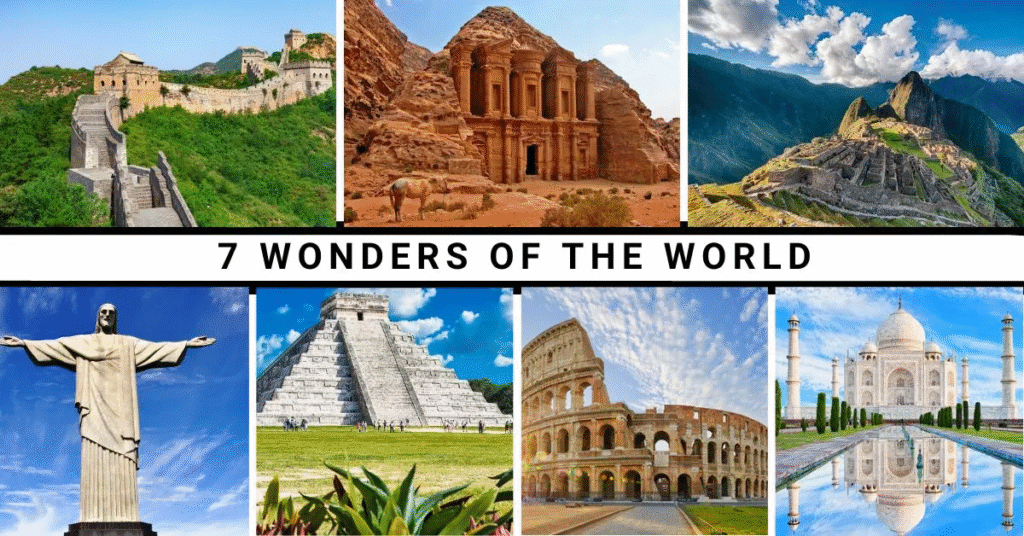
What Constitutes the Seven Wonders of the World
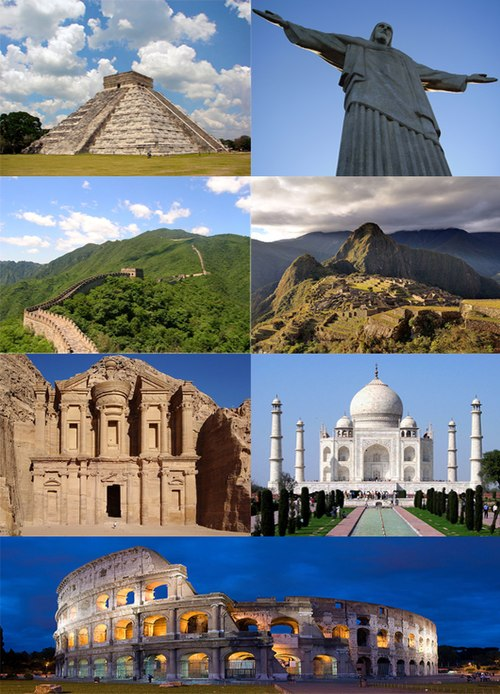
Below is the list of officially recognized New Seven Wonders of the World, which are historically, culturally, and architecturally significant.
1. Great Wall of China (China)
It is one of the most iconic structures ever built and stretches over thousands of kilometers to keep invasions from Chinese states. The wall is not a single structure but a series of walls, watchtowers, and fortifications that were constructed over several centuries.
What makes the Great Wall extraordinary is the magnitude of its scale and endurance. The wall built with stone, brick, wood, and earth reflects ancient China’s advanced military planning and engineering. Today, it serves as a powerful symbol of national pride and human determination.
2. Petra (Jordan)
Petra is more often referred to as the “Rose City” because it is an ancient archaeological city carved into pink sandstone cliffs. It used to serve as a place of major trading and was the capital of the Nabataean Kingdom.
Probably the most famous structure in Petra is Al-Khazneh, or The Treasury, with its intricate façade and towering columns. The richly developed water management system allowed Petra to flourish in the desert, thus being an engineering wonder of ancient civilization.
3. Christ the Redeemer (Brazil)
Christ the Redeemer is a towering statue of Jesus Christ that extends its watch over the city of Rio de Janeiro. On top of Mount Corcovado, this statue has been transformed into a global sign of peace, faith, and Brazilian culture.
Finally completed in the early 20th century, this statue’s outstretched arms stand for welcome and unification. Because of its views, it is one of the most visited landmarks in South America.
4. Machu Picchu (Peru)
Machu Picchu is an ancient Incan city nestled in the high Andes Mountains. Once hidden for centuries, it was rediscovered in the early twentieth century and remains one of the most mysterious archaeological sites in the world.
This city is well-renowned for its stone construction, agricultural terraces, and even the alignment of the stars. Without the help of modern tools during its construction, Machu Picchu has survived earthquakes and bad weather-what an astonishing work by the Incas in terms of engineering skills.
5. Chichén Itzá (Mexico)
Chichén Itzá was one of the largest cities in the Maya civilization and is most famous for the pyramid El Castillo. The construction is a good example of the astronomical and mathematical knowledge of the Maya.
When the sun falls on the steps during the equinoxes, it gives the appearance of a serpent descending down the pyramid, a phenomenon that remains in awe among the visitors. The site at Chichén Itzá reflects the religious, scientific, and cultural heights attained by the Maya.
6. Roman Colosseum (Italy)
The Colosseum in Rome is one of the biggest examples of ancient Roman architecture. Having been built almost two thousand years ago, it was used for various purposes, including gladiator contests, public spectacles, and theatrical performances.
The Colosseum featured massive stone arches and advanced engineering that allowed it to hold tens of thousands of spectators at once. Today, the ruins stand in testament to the Roman innovation that once commanded such a structure along with the power and complex social history it was built upon.
7. Taj Mahal (India)
The Taj Mahal is a beautiful mausoleum made of white marble and built by Mughal Emperor Shah Jahan in remembrance of his wife. It is widely regarded as one of the most beautiful buildings in the world.
It is admired for symmetry, for carvings, and for precious stone inlays. Beyond architectural beauty, the Taj Mahal means eternal love and devotion, attracting millions of visitors each year.
Why is this wonder so important?
These are not merely tourist attractions but something more. The Seven Wonders of the World stand for:
- Human creativity and engineering excellence
- Cultural and historic heritage
- Artistic expression across civilizations
- Global common heritage
Every single wonder speaks volumes about the values and beliefs of the people building it, with a say in something over humanity’s past and a lesson for inspiring further generations.
Seven Wonders of the World in a Nutshell
| Wonder | Country | Civilization / Era |
|---|---|---|
| Great Wall | China | Ancient Chinese Dynasties |
| Petra | Jordan | Nabataean Civilization |
| Christ the Redeemer | Brazil | Modern Era |
| Machu Picchu | Peru | Inca Civilization |
| Chichén Itzá | Mexico | Maya Civilization |
| Colosseum | Italy | Roman Empire |
| Taj Mahal | India | Mughal Empire |
FAQs
Q1: Are the Seven Wonders natural or man-made?
All Seven Wonders of the World are made by human hands.
Q2: Is the Great Pyramid of Giza still a wonder?
Yes, it’s the only remaining wonder in the ancient list and it is recognized separately.
Q3: Who elected the New Seven Wonders?
These were selected through a worldwide public selection process.
Q4: May the list change in the future?
The official list is fixed, but there may be new cultural discussions emerging.
Q5: Which is the most visited wonder?
These include the Colosseum and the Taj Mahal, which are among the most visited sites.
Q6: Why are there exactly seven wonders?
Ancient cultures considered the number seven to be symbolic of perfection.
Conclusion
What, then, is considered the seven wonders of the world? They are incredible monuments that reflect human ingenuity, will, and cultural variety. From the ancient stone walls of China to the elegant marble beauty of the Taj Mahal, each wonder tells a powerful story of human achievement.
These monuments remind us that, generation after generation, mile after mile, in their very own way, people try to create something worthwhile and permanent. Looking upon or reading about the Seven Wonders of the World constitutes not only a tour of the breathtakingly fabulous structures but also an insight into human history as a whole and an appreciation for the legacy left to humanity.


