

Sweet Peas: Complete Guide to Growing, Planting & Care
Sweet peas are classic, fragrant, and colorful flowering plants loved by gardeners the world over. Their scent is natural, soft, and old-fashioned, giving this plant an appealing, elegant look that any garden would house.
Sweet peas are climbing vines that require trellis, stakes, or even fences for some instances of vertical growth. They have a long blooming period, from early spring to early summer.
These plants are suitable for beginners in the following ways:
- Seeds germinate readily.
- Plants establish quickly
- Colorful flowers bloom frequently.
- Suitable for most climates, although preferably cool
- Low maintenance required
Sweet peas not only enhance garden beauty but bring life and movement with their climbing vines.
Sweet Pea Flowers – Colours, Fragrance, Shapes, and Types
Fragrance
Sweet pea flowers have a delicate, sweet, and classic fragrance that naturally blends with other garden flowers.
Colours
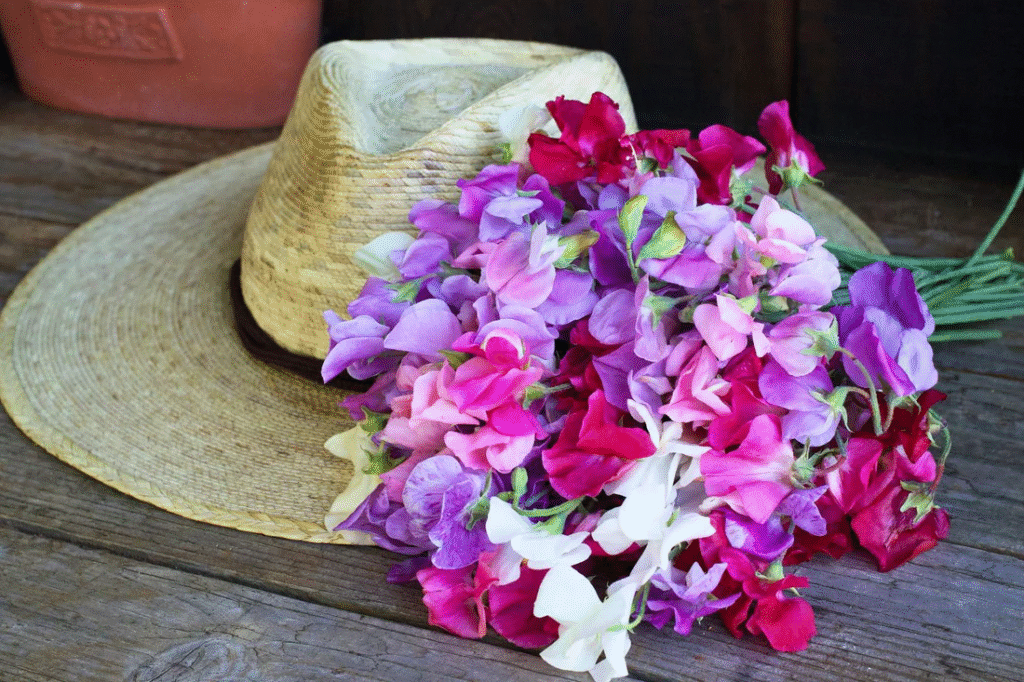
Available in over 15 shades:
- White
- Lavender
- Purple
- Pink
- Red
- Blue
- Peach
- Bi-colour combinations
Gardeners also create mixtures of various colors within a garden, to achieve a full spectrum.
Flower Structure
Sweet pea petals are soft, silky, and slightly ruffled. Some varieties have round petals, while others are wavy or frilled.
Popular Varieties (Entities)
- Lathyrus odoratus – classic fragrance
- Spencer Sweet Peas – large, ruffled petals
- Cupani Sweet Peas – strongest fragrance
- Old Fashioned Sweet Peas – traditional fragrance
- Bijou Dwarf Sweet Peas – small, pot-friendly
- High Scent Sweet Peas – maximum fragrance
Sweet Pea Seeds – Selection, Treatment, and Sowing
Seed Selection
- Use fresh, high-quality seeds
- Check expiration dates
- Select large, healthy seeds
- Avoid broken or shriveled seeds
Seed Preparation
- Soaking: Soak seeds in warm water for 6–8 hrs. to soften seed coat.
- Nicking: Scratch hard-coated seeds lightly to allow for faster water absorption.
- Paper Towel Method: Wrap seeds in a wet paper towel for 24–48 hours until seeds begin to crack, then plant in soil.
Growing Sweet Peas – a Step-by-Step Guide
Best Time to Plant
- Late winter or early spring
- Autumn in cooler climates
Soil Preparation
- 50% garden soil
- 30% organic compost
- 20% sand or perlite for drainage
- Slightly alkaline soil preferred
Planting Depth and Spacing
- Sow seeds 1 inch deep.
- Space plants 6–8 inches apart
- Row spacing: 12–18 inches for good air circulation and disease tolerance
Sunlight Requirement
Sweet peas need 6 to 8 hours of direct sunlight daily for strong growth and blooming.
Caring for Sweet Peas – Detailed Routine
Waterings
- Keep soil consistently moist
- Avoid waterlogging
- Avoid wetting leaves to help prevent fungal problems.
- Water, preferably in the morning
Fertilizing
- Use low-nitrogen, high-potassium fertilizers
- Recommended: compost tea, liquid seaweed, organic bloom boosters
- Avoid over-fertilizing to prevent undue leaf growth.
Pinching and Pruning
- When seedlings reach 4–6 inches, pinch the top growth
- Encourages bushy growth and more side branches.
- More branches = more flowers
Support Structures
- Trellis, bamboo stakes, or wall nets are necessary
- Keeps vines upright and allows better aeration and sun exposure.
Blooming – Maximising Sweet Pea Flowers
Tips for More Blooms
- Regularly cut flowers
- Provide shade in extreme heat
- Soil moisture should be adequate.
- Apply potassium-rich fertilizer
- Avoid overcrowding
Flowering Pattern
- Sweet peas bloom continuously from early spring to early summer.
- Regular cutting encourages new blooms
Pests and Diseases
Common Issues
- Aphids
- Whiteflies
- Powdery mildew
- Root fungus
Prevention and Treatment
- Spray neem oil or garlic water
- Only proper spacing and airflow
- Avoid wetting the leaves while watering
FAQs About
Q1. What is the best season for growing sweet peas?
Late winter or early spring is best. In areas with harsher winters, fall (September–October) also works well.
Q2. Can sweet peas be sown directly into the soil?
Yes, but pre-germination using the paper towel method speeds up sprouting.
Q3. Can sweet peas grow in pots?
Yes, they grow in pots that are at least 12–15 inches deep and with a trellis to lean on.
Q4. How Long Does it Take For Sweet Peas to Bloom?
About 8–10 weeks after sowing.
Q5. Are sweet peas heat tolerant?
Sweet peas are heat-sensitive; extreme summer heat slows flowering. Provide shade in hot afternoons.
Q6. What is the frequency of fertilizing sweet peas?
Every 14–15 days with low-nitrogen, high-potassium fertilizer.
Q7. Are sweet peas able to grow inside?
They can, but require ample sunlight. For better results, they are grown outdoors in direct sunlight.
Conclusion
Sweet peas are the perfect flowering plant for gardeners of all levels. A little seed preparation, some soil work, a good amount of sun, proper watering, fertilization, and regular pinching will give you vibrant, fragrant, and profuse flowers from your sweet peas. They are ideal for garden beds, balconies, terraces, and even large pots. Proper support ensures healthy growth and maximizes flowering. If you follow this comprehensive guide, you can be assured of a long, healthy, and colorful blooming season, which makes sweet peas one of the most satisfying plants to grow.


