

How Long Does Cocaine Stay in Your System? Effects & Health Facts
In general, when people inquire about How Long Does Cocaine Stay in Your System, they are trying to establish how long the substance can be detected in the body and what ill effect it has on health. Cocaine is a very strong stimulant that influences the brain, nervous system, heart activity, and overall physical functioning. Although its action passes fast, the body might show its presence over a longer period of time, depending on your metabolism and other factors like intensity and pattern of use, and type of drug test.
This guide explains how long it takes for cocaine to be detected in the body, describing the breakdown process of the drug, the presence of its metabolites, associated health risks, and all the relevant medical information. This article is intended only for education and harm reduction, helping readers understand the health impacts and why professional medical support is crucial.
How Cocaine Breaks Down in the Body
Understanding how long cocaine remains in one’s system requires knowing what exactly happens after consumption. Cocaine rapidly enters the bloodstream and reaches the brain within several seconds. The body then converts it into metabolites-the most common of which is benzoylecgonine-which is the substance tests check for.
How is Cocaine Metabolized?
- The immediate absorption is through the mucous membranes, lungs, or bloodstream.
- Rapid stimulation of the brain’s dopamine system
- Metabolism by the liver into benzoylecgonine and other compounds
- Excretion in urine within days
Although the “high” only lasts minutes to hours, the metabolites remain in the body much longer, which is why detection times vary widely.

Detection of Cocaine in Various Tests
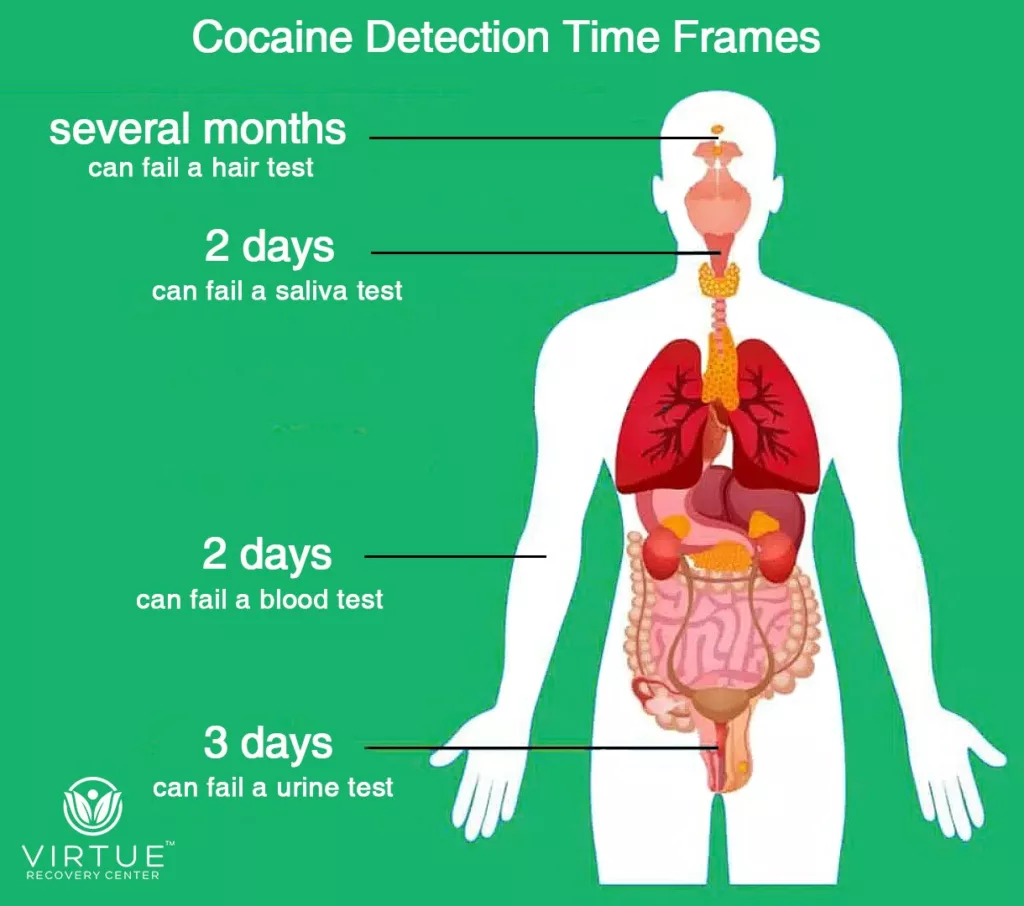
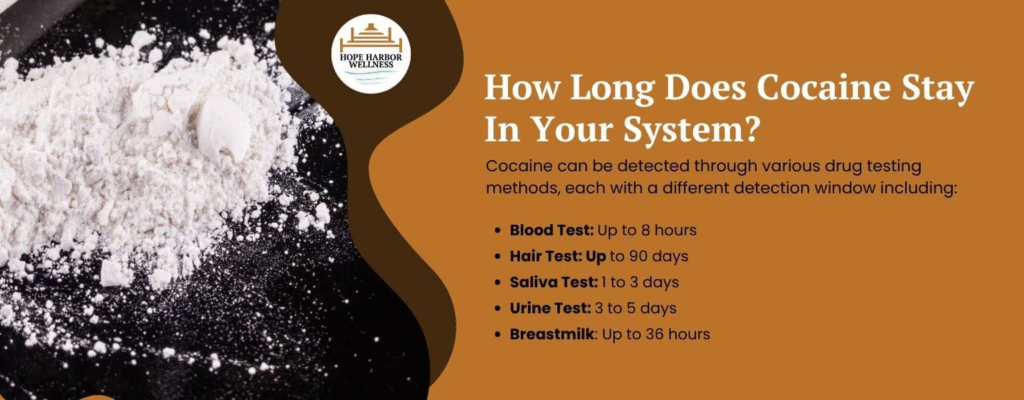
Detection depends on the biological sample used. The detailed quantification of cocaine detection windows follows below.
1. Urine Test Detection Time
The most common type is a urine test.
- Single use: 1–3 days
- Moderate use: 3-5 days
- Heavy or repeated use: up to 10–14 days
The urinalysis test will identify benzoylecgonine, which remains longer than the active effects of cocaine.
2. Blood Test Detection Time
Tests for recent use are conducted through blood.
- Detection window: 12–48 hours
It metabolizes rather quickly, so cocaine leaves the blood faster.
3. Saliva Test Detection Time
Saliva tests are used for more immediate detection.
- Detection window: 1–2 days
However, it does vary with hydration and metabolism.
4. Hair Follicle Test Detection Time
Hair tests show long-term use patterns.
- Detection window: Up to 90 days (or even longer in some specific cases)
Hair testing detects metabolites trapped in hair growth and, therefore, is the longest method of detection.
Summary Table: How Long Does Cocaine Stay in Your System?
| Test Type | Detection Time |
|---|---|
| Urine | 1–14 days |
| Blood | 12–48 hours |
| Saliva | 1–2 days |
| Hair | Up to 90 days |
Variables Affecting How Long Cocaine Stays in Your System
Even general timelines tend to differ because of a lot of biological and lifestyle factors that can vary the actual duration.
1. Frequency of Use
- Occasional users can clear cocaine more quickly.
- Heavy and chronic use leads to the accumulation of metabolites.
2. Body Weight & Metabolism
Individuals with slower metabolism may process the drug more slowly.
3. Hydration Level
Hydration helps to filter metabolites through the kidneys, but it does not clear them all instantly.
4. Age
Older adults have slower metabolic rates.
5. Liver Function
The liver breaks down cocaine, so any impairment to this vital organ will extend detection time.
Short-Term Effects of Cocaine on the Body
Knowing how long cocaine remains in the system also entails understanding what it does inside the body. Cocaine does have a fast-acting stimulating effect, which includes:
- Energy boost
- Tachycardia or increased heart rate
- High blood pressure
- Euphoria and alertness
- Loss of appetite
But these effects fade within minutes to hours, even though metabolites linger in the system.
Long-term Health Effects of Using Cocaine
Regardless of the rate that the body clears the drug, long-term use is associated with serious health complications:
- Heart rhythm disorders
- Addiction and dependency
- Anxiety and depression
- Hypertension
- Increased stroke risk
- Memory and concentration problems
- Loss of appetite and changes in weight
Chronic usage also affects the lungs, heart, liver, and even the brain.
Why Cocaine remains in the System Longer Than Its Effects
Because cocaine is rapidly degraded, the stimulating high disappears quickly. However, its metabolites, particularly benzoylecgonine, can be detectable for days or weeks. In fact, its metabolites persist in body fluids when the stimulant effects have disappeared.
This is why one feels “normal” and yet still tests positive.
How the Body Eliminates Cocaine
The body has several ways to eliminate cocaine:
- Urine: Primary route
- Sweat: In traces
- Breath: Slight traces
- Hair: Long term storage
This multi-stage process is the reason why detection windows vary by test type.
Health-Oriented Guidelines toward Safe Recovery
Doctors advise the following in case of cocaine use:
- Talking with a physician or counselor
- Utilizing substance-use support resources
- Developing a safe, monitored recovery plan
- Maintaining adequate hydration and nutrition
- Seeking professional help to manage stress or emotional triggers
Recovery might be possible with support and professional guidance.
FAQs:
Q1: Which is the most accurate test for cocaine detection?
Hair tests have been shown to have the longest detection window, whereas urine tests are most commonly used.
Q2: How long will cocaine remain in your urine?
Usual duration: 1–3 days, with heavy use may reach up to 10–14 days.
Q3: Does drinking water increase the rate of cocaine removal?
No. Water helps the kidneys but does not immediately act on the metabolites.
Q4: Why does hair show cocaine for 90 days?
As the hair fibers grow, metabolites become trapped, allowing detection to take place for several months.
Q5: How long does cocaine stay in the blood?
Normally from 12–48 hrs depending on metabolism
Q6: Is it possible to speed up how fast cocaine leaves your system?
There is no medically safe method to instantaneously remove cocaine. Only time and healthy recovery support the process.
Conclusion
Understanding how long cocaine remains in one’s system is important from a health awareness perspective and informed decision-making regarding drug use. Although the active effects of cocaine do not last very long, its metabolites stay in the body days, weeks, or months, depending on the test type and usage frequency. Various factors, such as metabolism, age, liver function, and hydration, determine the period the drug stays detectable.
More importantly, cocaine use is associated with serious short-term and long-term health effects. Individuals experiencing cocaine use, either their own or that of others, are encouraged to seek assistance from certified medical and mental health professionals. Safe recovery and long-term wellness are possible at any time with proper guidance.


