

Animal Farm book – Summary, Characters & Lessons
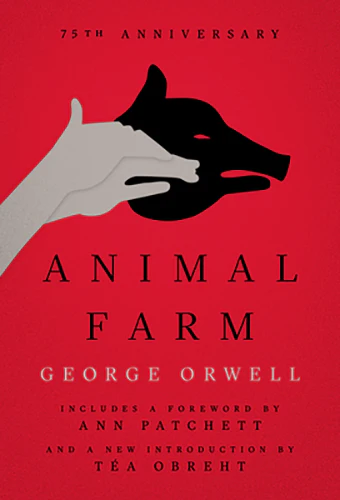
Animal Farm is a political allegory novel that was written by George Orwell.
The book uses animals to mirror real-life politics and society.
Although the plot is simple, there are deep meanings in it about power, corruption, leadership, and freedom.
What is Animal Farm book About? (Short Introduction)
The novel Animal Farm is set on a farm where the animals revolt against the farm owner, Mr. Jones.
Their objective is:
“To run their own lives without human oppression.”
Over time, however, some animals gain ascendancy over the other ones and begin oppressing them.
Main message:
“Power can corrupt anyone, be it a human or an animal.”
Animal Farm Book Summary (Detailed Version)
1. The Beginning of the Rebellion
Old Major is a very wise and aged boar who stimulates the animals to rebel against the humans.
He explains the concepts of equality and freedom.
The animals then chase away Mr. Jones after his death and take over the farm.
2. The Animal Rules Are Created
After the rebellion, the animals establish 7 commandments as laws for the farm.
Most famous rule:
“All animals are equal.”
These rules stand for fairness, justice, and unity.
3. Leadership and Conflict
Snowball and Napoleon become the leaders.
- Snowball: intelligent and visionary
- Napoleon: shrewd and power-hungry
Conflict ensues, their ideas clash, and eventually Napoleon drives Snowball away, gaining full control.
4. Propaganda and Manipulation
Napoleon uses Squealer, a clever pig, to spread propaganda.
Squealer hoodwinks other animals to support Napoleon’s actions.
They become the private army of Napoleon, intimidating any that may stand in opposition.
5. Changing the Rules
Napoleon gradually changes the rules:
- “All animals are equal” →“All animals are equal, but some animals are more equal than others.”
- Pigs gain privileges, while common animals are still struggling.
6. Conclusion: Realization and betrayal
By the end, the animals realize that the freedom they gained was simply replaced with a new form of control.
The pigs become indistinguishable from humans, completing the cycle of corruption.
Main Characters (Entities)
- Old Major – Inspiration and visionary
- Napoleon – Dictator and power-hungry leader
- Snowball – honest and smart leader
- Boxer – hardworking and loyal horse
- Squealer – Master of propaganda
- Mr. Jones – Farmer, symbol of oppression
- Benjamin: wise donkey, observer of reality
- Dogs – Napoleon’s enforcers
Themes
- Power and corruption
- Dictatorship and totalitarianism
- Leadership and betrayal
- Manipulation and propaganda
- Freedom vs oppression
- Equality versus inequality
- Revolution and politics
- Social class and hierarchy
Symbolism & Deeper Meaning
- Farm → Society or country
- Pigs → Political leaders/ elite
- Boxer → Hard-working ordinary people
- Animal Rebellion → Revolutions / historical uprisings
- Farm Rules → Laws and Constitution
It was written by George Orwell as a reflection of the Russian Revolution and Stalin-era politics.
Lessons We Learn From Animal Farm
No revolution is perfect.
- It is the case that any person can be corrupted by power.
- Education and awareness are key.
- Blind trust and obedience are dangerous.
Leadership must be honest and responsible.
FAQs
Q1: Who is the author of Animal Farm?
A: George Orwell
Q2: This book is about politics and history.
A: Yes, it explains the Russian Revolution and dictatorship indirectly.
Q3: Is Animal Farm easy and interesting to students?
A: The language is simple, and the story is captivating.
Q4: What is the moral of Animal Farm?
A: If leadership is corrupt, freedom is lost.
Q5: Is this book only for adults?
A: No, it’s easily understandable by teenagers and students if guided accordingly.
Conclusion
Animal Farm is a simple tale, yet rich in the depth of its impact. It is a novel explaining the realities of power, corruption, and society. It shows that where leadership and power are unaccountable, people can fall right back into oppression. This book serves as an excellent platform for instilling critical thinking and awareness in both students and readers.


