

6 Early Signs of a Heart Attack a Month Before
Heart attacks are currently among the leading causes of death all over the world, and many people believe they happen so suddenly without warning. It is true that 6 Early Signs of a Heart Attack a Month Before , but research and medical experience seem to prove that many people experience subtle warning signs weeks or a month before a heart attack occurs. These early symptoms are unfortunately often ignored, mistaken for stress, fatigue, or minor health issues.
Knowing the early warning signs of a heart attack a month in advance can save your life. This enables you to seek treatment for symptoms, manage risk factors, and even avoid a potentially life-threatening cardiac event. Common warning signs are explained here, including the possible causes and when you should seek medical assistance.
Why Do Symptoms Of A Heart Attack Appear Weeks In Advance?
A heart attack generally builds up over time as the coronary arteries become blocked or narrowed. As blood flow to the heart slows down, the body starts sending out warning signals. At first, these signs might be mild, yet they are the heart’s way of waving a red flag.
Factors increasing the risk of prodromal symptoms include:
- Hypertension
- High cholesterol
- Diabetes
- Tobacco use
- Obesity
- Chronic stress
- Family history of heart disease
Recognizing early heart attack symptoms gives you a critical window of time to take action.
1. Ongoing and unusual tiredness
Unexplained fatigue, which does not improve with resting, is one of the early signs of a heart attack. This fatigue feels different from normal tiredness. Many people describe it as a gjness of overwhelming exhaustion where doing simple tasks seems very difficult.
You may notice symptoms such as:
- Does sleeping well still make me feel exhausted?
- Difficulty with performing the usual activities
- Heavy or weak sensation of arms and legs
- Lack of stamina
This symptom is most common among women, though it may affect men, too. The fatigue continues to persist because the heart is particularly failing to pump enough oxygen-rich blood to the body.
When Fatigue Becomes a Red Flag
Fatigue is considered serious and should be taken seriously if it:
- Suddenly appears, without explanation
- May continue for days or weeks
- Occurs along with chest discomfort or shortness of breath
2. Shortness of Breath During Simple Activities
This is another symptom of an early heart attack that may appear weeks before the event, and it’s medically known as dyspnea. You could struggle to breathe during activities that didn’t use to give you any problem.
Common symptoms and signs include:
- Stairs make me winded.
- Difficulty breathing while walking short distances
- Shortness of breath when lying down
- Waking up at night gasping for breath
This is because impaired heart function restricts oxygen supply to the lungs and muscles.
Why Shortness of Breath Is Dangerous
An outstanding symptom of shortness of breath, occurring even when at rest and without concurrent exercise, infection, or lung disease, may indicate the presence of heart failure or a decreased cardiac output-all conditions that heighten the risk for heart attack.
3. Chest Discomfort or Pressure
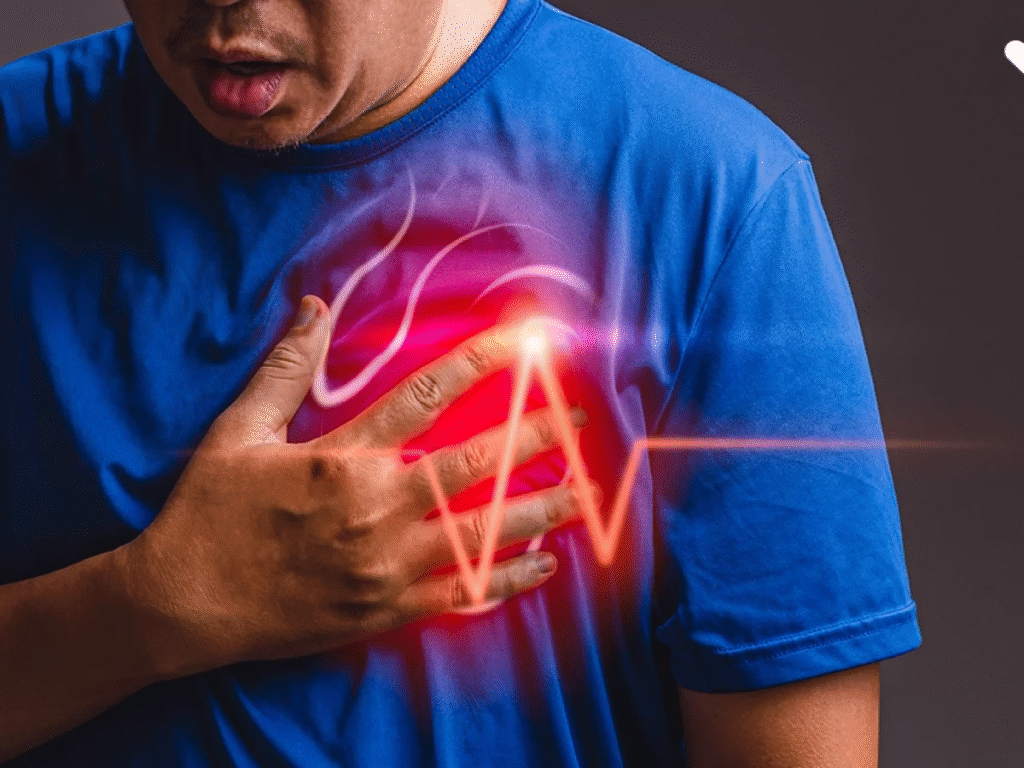
Chest discomfort is the most widely recognized heart attack symptom, but early chest symptoms are often mild. Instead of a sharp pain, you may feel:
- Light pressure
- tightness, or squeezing
- Burning sensation
- Fullness in the chest
This may be intermittent in nature and has at one time or another been confused with indigestion, acid reflux, or muscle strain.
Early vs. Severe Chest Pain
Early warning chest discomfort:
- Mild or moderate
- Occurs during activity or stress
- Improves with rest
What this may mean is that occasionally ignoring repeated chest discomfort can allow the condition to worsen over time.
4. Dizziness or Lightheadedness
Without an obvious reason, feeling dizzy, faint, or lightheaded can be another warning sign of a heart attack one month in advance. This may be due to the reduced blood flow to the brain.
Some of the issues he may be faced with include:
- Feeling faint when standing
- Sudden loss of balance
- Brief confused states
- Spells of almost fainting
When Dizziness Is a Red Flag
If dizziness is accompanied by some symptoms, it causes concern due to:
- Chest discomfort
- Shortness of breath
- Tachycardia or irregular heartbeat
These combinations strongly indicate some sort of heart problem.
5. Swelling in Legs, Ankles, or Feet
Edema, or swelling in the lower body, can indicate that the heart is not pumping effectively. When blood flow slows, the fluid can begin to build up within tissues-most commonly in the legs and the feet.
You might notice:
- Inching towards evening with tight shoes
- Skin indentations after removing socks
- Swelling that gets worse after standing or sitting
Why Swelling is a Sign of Heart Stress
Edema often appears when the heart struggles to move blood forward, causing fluid to back up in the body. While swelling has many causes, combined with other symptoms it is not to be ignored.
6. Irregular or Fast Heartbeat
Another early sign of a heart attack is an abnormal heartbeat, or arrhythmia. You may feel
- Ksepulgės krūtinėje by Arūnas Žebriūnas Flapping in the chest
- Racing heartbeat
- Skipped or irregular beats
- Rest palpitations
The occurrence of occasional palpitations is common, while frequent or persistent irregular heartbeats may point to an underlying heart condition.
Heart rhythm changes – when to worry
Seek medical attention if irregular heartbeat is accompanied by the following:
- Dizziness
- Chest pain
- Shortness of breath
- Fatigue
Who Is at Higher Risk of Early Symptoms of Heart Attack?
People in the higher-risk category include:
- Adults above the age of 40
- Smokers
- People with diabetes
- People suffering from high cholesterol or blood pressure
- Those with a family history of heart disease
- People who suffer from chronic stress
FAQs
Q1: Can the symptoms of 6 Early Signs of a Heart Attack a Month Before in advance?
Yes, many people have mild warning signs weeks or even a month before a heart attack.
Q2: Do early heart attack symptoms differ between men and women?
Yes, women often have symptoms such as fatigue and nausea and shortness of breath rather than severe chest pain.
Q3: Is it possible to identify a heart attack by fatigue alone?
While fatigue alone may not confirm a heart attack, persistent unexplained fatigue should be evaluated by a doctor.
Q4: Should I seek medical advice on minor symptoms?
Yes, early assessment may avoid major problems.
Q5: Is it possible to avoid heart attacks once the early signs of an attack have appeared?
In most instances, lifestyle changes, medication, and medical care can greatly lower risk.
Q6: What do I do if I see more than one warning sign?
Seek immediate medical attention, or contact a cardiologist as soon as possible.
Conclusion
Early symptoms of a heart attack may show up weeks, even a month, prior to the event-a critical opportunity to avoid the attack altogether. Persistent fatigue, shortness of breath, chest discomfort, dizzy spells, swelling, and irregular heartbeat should never be ignored. Although these signs and symptoms may appear to be mild or unrelated, in reality, together they represent serious heart stress.
It’s all about listening to your body and seeking medical advice early enough, which will save your life. If you or someone you know shows a combination of these signs, immediately consult with a qualified healthcare professional. Early diagnosis and timely treatment can be quite vital in improving the outcome and reducing the risk of a heart attack.


